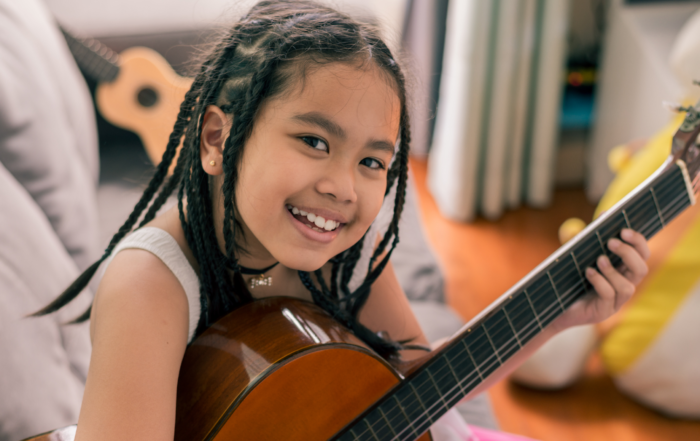
On Being a Music Teacher

by chrismarti on May 15, 2012

It is that stressful time of year when we often wonder why we ever wanted to become a music teacher in the first place.  We are in the middle of preparations for exams, followed by recitals, followed by summer program scheduling and planning for next year.  I sometimes think that if I were to give up sleeping, I might actually be able to get everything done.  At times like this, I find that I have to sit back and really think about what it is I actually do, and why my job is so important.  That’s when I realize that being a music teacher can be both one of the most truly fulfilling jobs, but also one that comes with the greatest of responsibilities.

Recently I had the opportunity to visit Wilfrid Laurier University, and to hear the student orchestra play.  It was one of the most amazing performances I have ever had the pleasure to attend.  Sitting and listening to all of those talented and dedicated young people, it struck me that each of them was there because, somewhere along the road, a music teacher had a positive impact on their lives.  Someone who was passionate about music was able to pass on the joy of making music to their students or children!

The responsibility of being a child’s first music teacher is an enormous one!  If all goes well, music will be a joyful part of their lives, and they may even one day end up on that University stage.  If the first experience learning music is a traumatic one, however, the joy of making music may be lost to that child forever.  I know many adults who are afraid to sing because, as children, they were told to “just mouth the words”.  I’ve also had young children break down into tears when I’ve asked them to sing in music class because, at one point, they had tried out for their elementary school choir and were told that they weren’t good enough.

When I taught in the school system, there was a poster in the Kindergarten class that read “everything I need to know in life I learned in Kindergarten”. I think that you could use the same poster in music class.  There are so many skills that are learned through music – public presentation, exam taking, dealing with mistakes, math and reading, memorization, working together as a team, following instructions, listening, creativity, coordination, self-confidence, self-discipline, perseverance.  It seems like an overwhelming job at the best of times.  One of the most amazing things about being a music teacher is that you don’t have to pass your students on to someone else after only a year.  You have the opportunity to watch them grow and develop all of these skills, and to be a part of the process.  Having a student start in a preschool music and movement class and stay with you until they head off to University is like having all the joy of being a parent without the stress!

We all come to teaching in different ways.  Some of us know from the time we are young that teaching is what we want to do.  Some of us find the passion for teaching only after having children of our own.  Whatever route brings us to this point, being a teacher is an important vocation that is both challenging and rewarding.  Some of the trials and tribulations of being a music teacher are aptly portrayed in the musical comedy “Two Pianos – Four Hands”. It is a hilarious look into the frustrations of teaching … and learning … musical skills. I was deeply insulted, however, by the insinuation made in the second half of the play, that … “if you aren’t good enough to perform, you can always teach”. A good teacher is so much more than just a “failed performer”.  A good teacher passes on knowledge and skills that can enrich a child’s life.  A good teacher can truly make a difference.


{ 0 comments }

The Fringe Benefits of Music

by chrismarti on November 6, 2011

Music is one of the greatest joys in life. We are surrounded by it in every step of our daily routine …. we have it in the background at home and at work, we walk down the street with it plugged into our ears . All forms of media rely on music to get their point across.  The music is what elicits an emotional response in a TV show or movie and, according to my son who is music composition major, it is the music that will either make or break a video game or show.  Music is also an integral part of all our most important milestones or special occasions.  We all have that “special song” that we want to hear at a wedding, anniversary, or even a funeral.

We’ve been made aware in the last few years about the effects that music has on the brain … music will make our kids smarter and help them with their math and science.  In the last few weeks, however, I’ve had the privilege of working on a program of music and therapy for children with special needs, a project which I’m very excited about.  Putting together the curriculum for this program has highlighted for me all the other benefits of involving our children in music:

Music can help kids of all ages to define their own identities and to have the self confidence to participate in social groups.  It can help develop social communication skills such as listening, self-expression and understanding.  Music can provide an outlet for emotional expression, but it can also help to keep those emotions under control.  It can encourage our children to be physically active, but can also help them learn to sit quietly and pay attention.  Musical activities can help our children develop body awareness, gross or fine motor control and coordination.  Active participation in music can also increase language skills and develop memory skills.  In short, it assists in all forms of mental and physical growth.

As we get closer to launching the new program, though, it strikes me that the greatest benefit of music is the ability to bring a few moments of pure joy into the lives of children and families who face unimaginable challenges every day.


{ 0 comments }

Why should my child take formal music exams?

April 6, 2011

Traditionally, music exams take place in June, and this is the time of year that most music teachers start making sure that their students will be well-prepared.  It is a lot of work and, for some students, the process can be quite stressful.  I am often asked, “Why should I send my child to a [...]

Read the full article →

What Can I Do to Get my Child to Practise?!

February 2, 2011

As a music teacher, I am often asked “How can I get my child to practise?”  I have found that the answer to this very simple question is often truly quite complicated. As the parent of 2 very talented, and yet very unmotivated young musicians, I often had the same question.  I was one of [...]

Read the full article →

Music for Celebration

December 16, 2010

Music is the universal language of mankind.  ~Henry Wadsworth Longfellow,Outre-Mer Music brings people together.  It can break through barriers of all kinds – linguistic, political, ideological – and can provide an inroad to communication and understanding. The power of music to overcome human obstacles is evident in one of my favourite  stories for this season, [...]

Read the full article →

Music Education: More than just how to play an instrument

January 27, 2010

More and more we are hearing how music can help with our children’s cognitive development and that a musical education is vital to their development, especially in the early years before the age of 9.  What does that mean to a parent?  How do we make sure that we are providing the best possible musical [...]

Read the full article →